

Don't Let Success Become Your Comfort Zone
Success is a wonderful thing. It validates the hard work, the sacrifices, and the countless hours spent pursuing a goal. But success also carries a hidden danger. If we're not careful, it can convince us that we've arrived.
That's when growth stops.
Throughout my cycling career, I learned that winning one race didn't guarantee I'd win the next. In fact, after every victory, my coaches and I would immediately begin asking one question:
"Where can we find the next 1%?"
We weren't looking for dramatic changes. We were searching for tiny improvements. Maybe it was a small adjustment to my bike position. Maybe it was refining my nutrition, improving recovery, strengthening a weakness, or making a subtle tactical change. Those small gains accumulated over time, and often they were the difference between standing on the podium and standing beside it.
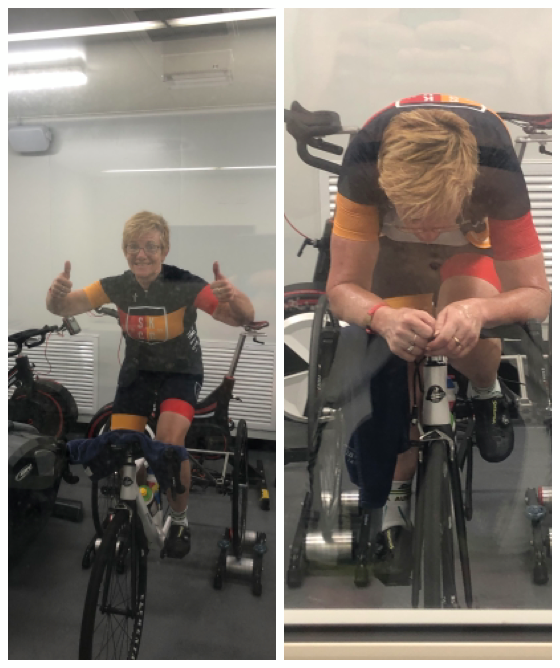
On the left in the heat chamber before my session and on the right after my session. Using the chamber to find that 1% more.
The biggest competitor wasn't always the rider wearing another country's jersey.
Often, it was complacency.
Success has a way of whispering, "You've done enough." It tells us to relax because what we're doing is already working. While there's nothing wrong with celebrating achievements, staying there for too long is where we begin to lose our edge.
The world doesn't stop evolving simply because we've experienced success.
Neither should we.
This applies just as much outside of sport as it does on the bike.
In business, companies that stop innovating because they've dominated the market eventually find themselves being overtaken by those willing to think differently. The organisations that thrive are the ones that constantly ask, "How can we serve our customers better? What can we improve? What haven't we noticed yet?"
The same is true for leaders.
A successful leader never assumes they know everything. They continue learning, listening, adapting and challenging themselves. They seek feedback instead of avoiding it. They understand that leadership isn't about reaching a destination—it's about continually becoming better.
And then there's our personal lives.
Comfort feels safe. Our routines become familiar. We stop taking risks because life feels predictable. Before long, weeks become months and months become years, and we realise we've been living on autopilot.
Growth rarely happens in comfort.
Whether it's learning a new skill, starting a business, improving our health, rebuilding relationships, or chasing a dream we've put on hold, every meaningful step forward begins by becoming slightly uncomfortable.
One of the questions I regularly ask myself is:
"Where have I become too comfortable?"
It's not always an easy question to answer because comfort can disguise itself as contentment. There is absolutely nothing wrong with appreciating what you've achieved or being grateful for where you are. Gratitude is essential.
But gratitude shouldn't become an excuse for standing still.
The difference lies in continuing to stretch yourself while appreciating the journey you've already taken.
The people who continue to grow aren't necessarily the most talented. They're often the ones who remain curious. They keep looking for their next 1%. They understand that improvement is never finished.
Success isn't the finish line.
It's simply proof that what you've been doing has worked up until now.
The question is whether it will still work tomorrow.
So celebrate your wins. Be proud of how far you've come. You've earned that.
Then ask yourself:
· Where have I become comfortable?
· What's my next 1%?
· What challenge have I been avoiding because comfort feels easier?
· What small step could I take today that my future self will thank me for?
Because the goal isn't simply to become successful.
The goal is to keep becoming the person who continues to grow long after success arrives.
After all, your greatest achievement may not be what you've already accomplished, it may be what you're still willing to become.