

The Lens You Choose Changes Everything
We’ve all heard the saying: is the glass half full or half empty?
Most people don’t realise that the answer to that question quietly shapes how they experience their entire life.
I want to share a moment where that choice became very real for me.
At the Tokyo Paralympics, just nine minutes into my road race, everything changed. In pouring rain, flying downhill at over 50km/hr, the Canadian athlete in front of me crashed. I had nowhere to go. I hit the safety bar of the German rider ahead, caught her back wheel, and was thrown from my trike.
It was a heavy crash.
I lost a lot of skin and suffered a collapsed lung. It was painful, frustrating, and dangerous. The race I had trained so hard for was over in an instant.
That’s the moment where perspective matters most.
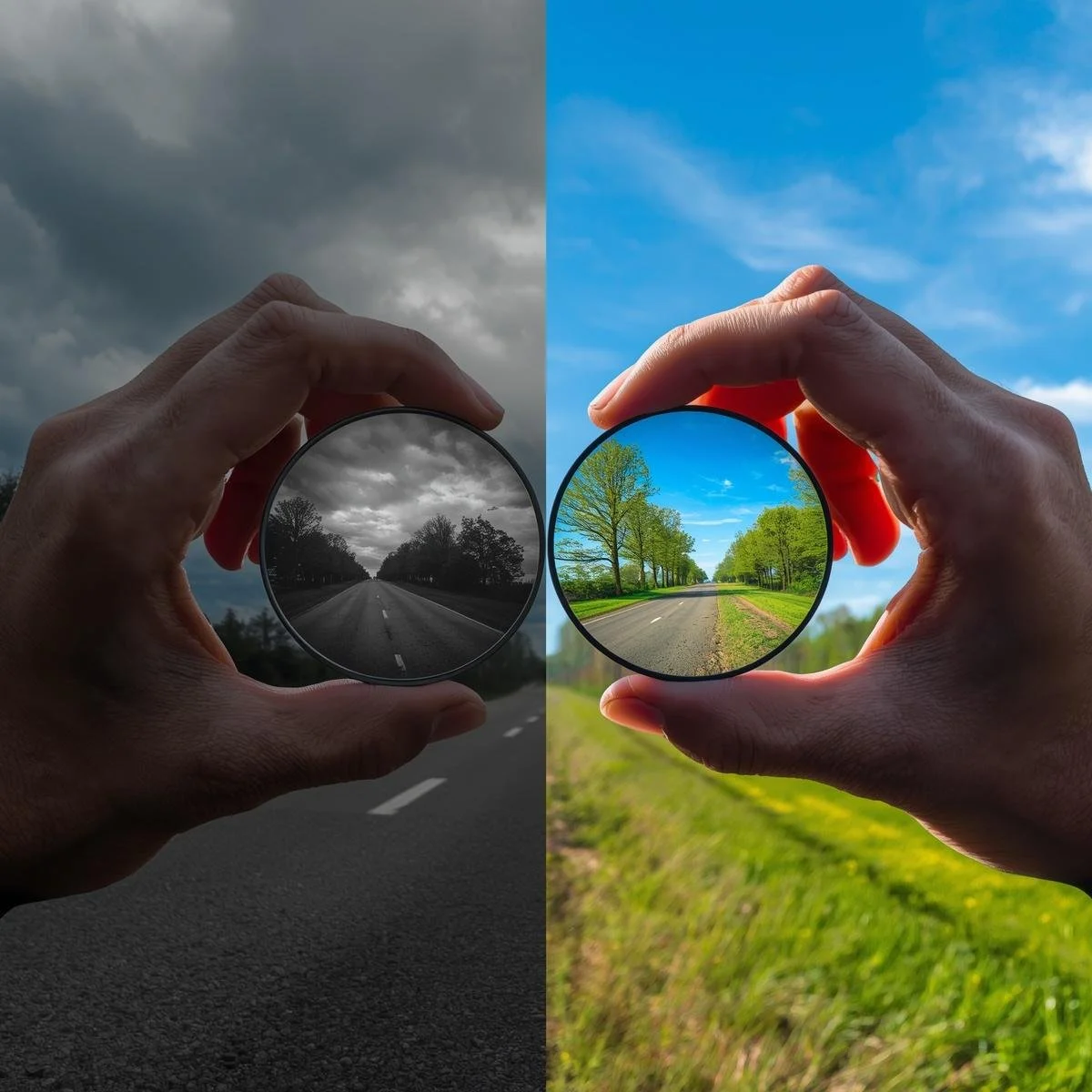
What lens will you choose?
Because while everything about that situation felt negative, there was a small, almost unexpected positive hidden within it.
Due to COVID restrictions, every athlete had to leave Tokyo within 24 hours of finishing competition. But I couldn’t fly after being discharged from hospital.
So I stayed.
In fact, I became the only Olympic or Paralympic athlete in the world who unexpectedly got to remain in Tokyo… as a tourist.
At first, it didn’t feel like a positive. I was injured, disappointed, and separated from my team. But one simple thought shifted everything: “Well… at least I get to explore Tokyo.”
That single shift in perspective changed my entire experience.
Instead of focusing on what I had lost, I started noticing what I had gained. I walked the streets, visited temples, tried new foods, and discovered parts of the city I would never have seen otherwise.
Nothing about the situation itself had changed. But my experience of it completely did.
That’s the power of perspective.
Positivity isn’t about pretending everything is perfect. It’s not about ignoring challenges or brushing over setbacks. It’s about choosing to look for what is useful, what can be learned, and what can still be appreciated.
And this isn’t just personal—it’s powerful in teams and in business too.
When people focus only on problems, pressure builds, communication breaks down, and progress stalls. But when individuals and teams choose to look for solutions, recognise effort, and celebrate small wins, something shifts.They become calmer. More connected. More resilient.
Small positive actions—encouraging a teammate, acknowledging effort, asking “what’s next?” instead of “what went wrong?”—they compound over time. That’s what builds high-performing, cohesive teams.
Positivity isn’t naive.
It’s deliberate.
It’s a choice.
And it’s contagious.
One thought can change a moment. One moment can change a day. And a consistent mindset can change results.
Because here’s the truth—we only ever have today. Yesterday is done. Tomorrow isn’t guaranteed. But today, you get to choose the lens you look through.
Frustration or curiosity.
Blame or ownership.
Fear or possibility.
In Tokyo, choosing to see the positive didn’t change the crash—but it changed me. It allowed me to find opportunity, notice beauty, and come back stronger, both mentally and physically.
And the same applies to all of us.
When you choose to look for the positive, you don’t just improve your own experience—you influence everyone around you.
You create solutions. You lift the team. And ultimately, you perform better together.
Because the lens you choose doesn’t just change what you see.
It changes what’s possible.